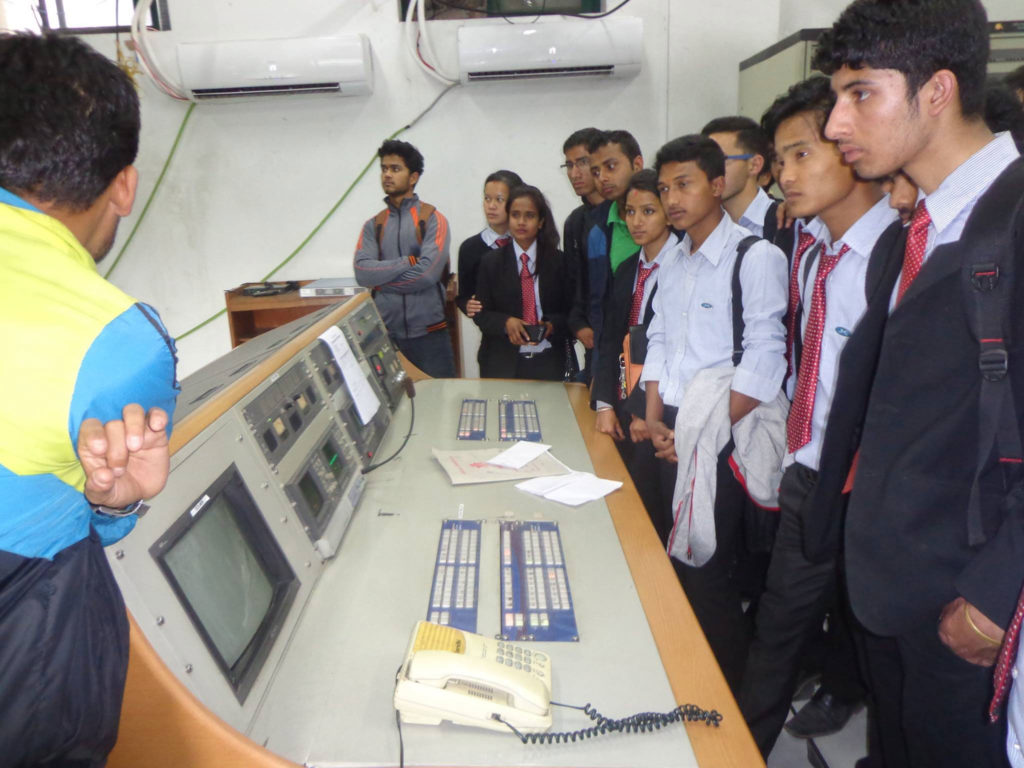
The Bachelor of Public Sector Management (BPSM) program at Bagmati University is designed to develop competent, ethical, and visionary professionals who are capable of delivering public goods and services in an efficient and innovative ways in Nepal. Recognizing the critical role of the public sector in the nation’s economy, this program focuses on equipping graduates with the knowledge, skills, and positive attitude to prepare graduates for managerial roles in public sector management and governance. The program emphasizes the development of professionalism, service-oriented mindset, ethical leadership, a commitment to social accountability along with entrepreneurial spirit among youth in Nepal.
The public sector encompasses all government-controlled, managed, or funded organizations, agencies, and activities, including but not limited to government bodies at local, state, and federal levels, regulatory authorities, public education institutions, security and national defense agencies, public healthcare facilities, public transportation systems, social welfare programs, and resource management departments. While public enterprises and non-profit organizations are not strictly part of the public sector, they often collaborate with or complement public sector activities. Hence, they are considered part of the broader public sector ecosystem.
Public Sector Management (PSM) is the systematic approach to planning, organizing, staffing, directing, and controlling activities within government organizations to achieve policy objectives and improve social welfare. It emphasizes the efficient utilization of public resources while ensuring transparency, accountability, and responsiveness to societal needs. A large number of public sector entities exists and a large pool of human and financial resources are allocated each year, but quality of service delivery of public goods and services has remained short of the expectation. Therefore, it has been imperative to optimize resource allocation and improve quality of governance by employing competent human resource who can apply the principles of management in the management of public sector institutions.
The BPSM curriculum is structured to provide an understanding of foundational knowledge and managerial skills for public sector management through a blend of subjects drawn from diverse areas. Subjects grouped under Foundation courses lay foundation for advance studies in every discipline. Subjects grouped under Management courses provide skills necessary for managing organizations in more efficient way or establishing a start-up on its own. Public Sector Management courses include core and specialized subjects related to public sector management. They cover various sectors such as health care, education and transportation management; and focus on governance, budgeting, accountability and entrepreneurship development. A wide range of subjects have been included in Electives that offer flexibility for students to explore emerging issues like sustainability, public sector innovation, and artificial intelligence, etc. The program incorporates practical exposure through internships, field works, and research projects to ensure hands-on learning and real-world application of theoretical knowledge. Additionally, keeping in view of eligibility conditions for admission, a set of subjects have been offered as pre-semester course. The subjects under pre-semester course are optional, therefore, students willing to advance their knowledge may join any of the subjects listed under pre-semester course.
By integrating business strategies, innovation, and entrepreneurial thinking, the program fosters the ability to drive efficiency, financial sustainability, and impactful reforms in the public sector. Overall, this program emphasizes the development of professionals who can work for transformative changes in public service delivery in Nepal. By blending management principles with attitudinal and ethical training, the program aims to prepare graduates who can lead with integrity, engage stakeholders effectively, and ensure citizen-centric governance.
The overall objective of the program is to produce graduates capable of driving improvements in public service delivery and governance. The specific objectives of the program are as follows:
Upon successful completion of the BPSM program, the graduates should be able to:
The candidate applying for admission to the BPSM program must have:
Eligible applicants must appear in the entrance test known as the Bagmati University Management Admission Test (BUMAT) conducted by the Faculty of Management, BU. The test will follow the international testing pattern and standards. It includes areas like verbal ability, quantitative ability, logical reasoning, and general awareness. There shall be altogether one hundred (100) objective questions in the BUMAT containing twenty-five (25) questions in each section with a total weight of 100 marks. Students must secure a minimum of 40% in the BUMAT in order to qualify for the interview. Applicants securing above the cut-off point marks in the BUMAT will be short-listed. Only short-listed candidates will be interviewed. The final merit list will be published after considering the BUMAT score, Grade 12 or equivalent score, and interview marks and selected for admission. The weightage for the BUMAT score, Grade 12 or equivalent score, and interview score will be 50 percent, 40 percent, and 10 percent, respectively.
The general teaching pedagogy includes varieties of methods and approaches – interactive lectures, cases and simulation, group work and seminar, etc. The choice of methods will be guided by the subject being taught. The teaching faculty will determine the choice of teaching pedagogy according to the need of the course. The concerned faculty shall develop work plan detailing learning outcomes, teaching-learning methods, assignments/ activities at the beginning of each semester and also recommend the basic text and other reference materials for effective teaching-learning of the course modules.
In general, interactive lectures will be used for concept delivery, real-world cases and simulation will be used for developing decision-making skills, budget analysis and crisis management exercises. Group work will be used for collaborative problem-solving purpose, guest lectures will be used for sharing public sector and industry insights and the seminar will be used as a student-centered learning method for deeper understanding and critical thinking around a specific subject. The seminar will serve as a platform for students to engage in intellectual discussions, and critically analyze emerging trends and challenges in public administration and governance. Students will be encouraged to actively participate, present their ideas, and learn from peer interactions under the guidance of faculty members and industry experts.
For experiential learning and hand-on experience, students will be exposed to practicum, public sector attachments (internship), field work, research project, social work and volunteering. They will bridge theoretical knowledge with practical applications, enabling students to explore real-world challenges, engage in collaborative learning, and develop professional competencies essential for public sector management. Faculty of Management will develop detail guidelines to effectively administer, supervise and evaluate these activities.
Practicum, a short-term, supervised learning experience, will be used to provide students with hands-on experiential learning opportunities. It involves both lab-based activities (e g. use of software applications) as well as hands-on engagement with real-world problems through applied projects in collaboration with public sector organizations, NGOs, or government agencies.
Students will go for an Internship in the fourth year of the BPSM program. It will allow a more extended, independent professional learning experience in relevant organizational setting. Students will work in organizations to gain practical exposure to operations and management practices. This immersive experience allows students to bridge the gap between theoretical knowledge and real-world application, enhancing their professional competencies. As part of the internship, students will prepare an individual project report in the prescribed format, reflecting their work and learning outcomes in the assigned organization. The evaluation will be based on a combination of the organization’s confidential report, the quality of the project report, and a presentation. The internship carries a weight of 3 credit hours, and students must achieve a minimum grade of “C” to complete this requirement.
In the fourth year of the BPSM program, students are required to undertake a Undergraduate Research Project. This project is designed to enhance students’ research skills and ability to critically analyze management issues in the organizations. By engaging in this rigorous academic exercise, students gain hands-on experience conducting independent research, applying theoretical knowledge, and using appropriate methodologies to address real-world problems. This process prepares students for future academic pursuits and equips them with the practical skills needed to address challenges in professional environments.
At the outset, it is assumed that Bagmati University will develop a framework for examination, evaluation and grading system that applies to all faculties of the University. In turn, Faculty of Management will also develop guidelines that applies across all programs in the Faculty of Management. Therefore, this section will have to be reviewed in light of the framework of the University and guideline of the Faculty of Management.







.png)